


Zero Torque vs. Face Balanced Putters: Why Zero Torque Doesn't Mean Face Balanced
If you've been living anywhere outside of a rock, you're familiar with the zero torque craze that has been the putter market for the last year. After L.A.B. successfully sent the putter market ablaze, nearly every major OEM has launched their own version of zero torque putters. Previous to zero torque, players had the choice between face balanced and some level of toe hang in. Across these two spectrums it's easy to understand how zero torque may differ from a putter with toe hang. But it's not as easy to conceptualize why Zero Torque is different than face-balanced. They sound similar — both are marketed around stability and a squarer face — but they solve the problem in different ways, and they're not built for the same stroke.
Explain how Zero Torque is Different Than Face Balanced like I'm Five:
Here it is: Face-Balanced putters are naturally square in a static position. When in motion, however, the head will not resist rotating. A zero-torque putter is designed to keep the face pointed at the target throughout the entire stroke and will resist rotation even in motion. It does this by aligning the shaft at the center of gravity of the putter. When stroked, a properly lie angle balanced putter should experience no twisting.
Let's Break It Down Further:
What Is a Face Balanced Putter?
A face balanced putter is designed so that when you balance the shaft on your finger, the face points straight up at the sky. This tells you the club has very little toe hang, but it doesn't necessarily mean it won't rotate during your stroke. Once you're swinging it, gravity, shaft lean, and the location of your hands all affect how the head behaves.
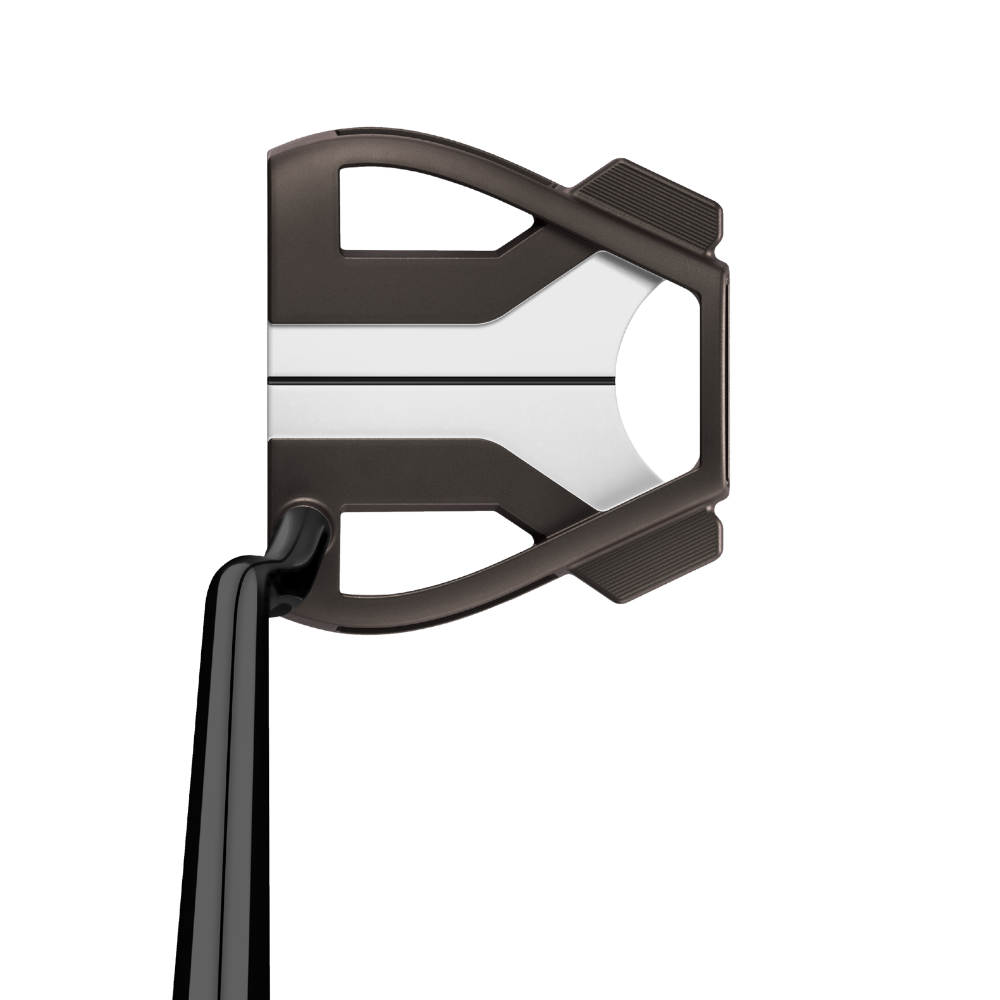
Face balanced putters are best suited to golfers with a somewhat straight-back-straight-through stroke — the head stays square with less manipulation from your hands. This is different from a traditional toe-hang blade (think classic Anser-style putters), where the toe drops when balanced and the face is meant to open and close through an arcing stroke. Face balanced designs are usually mallets or larger head shapes with weight distributed around the perimeter, which also helps forgiveness on off-center hits — though balance type and forgiveness are technically separate things; a face balanced putter can still twist on a bad strike if its overall MOI is low.
Our Best Selling Face Balance Putters:
- Scotty Cameron 2026 Phantom 9R Custom Putter — a compact mallet with max-alignment styling built for players who want a face balanced head without a bulky footprint.
- Scotty Cameron 2026 Phantom 12 Custom Putter — part of the same Phantom family with a distinct shape for golfers dialing in their eye at address.
- TaylorMade 2026 Spider Tour X DB Custom Putter — a high-MOI Spider build with a HYBRAR dampener for a softer, more controlled feel at impact.
What Is a Zero Torque Putter?
Zero torque putters build on the face balanced idea rather than replacing it. Instead of just aligning the CG with the shaft axis for balance-at-rest, zero torque designs engineer the shaft to enter directly into the head's center of gravity — often via a bent shaft, offset hosel, or forward-press grip. The result is a head that resists the twisting force (torque) created by your grip and hands, not just the rotation created by an arcing stroke path.
You can tell the difference with the balance test: a face balanced putter points face-up when balanced on a finger. A zero torque putter typically balances with the toe pointing straight up, since the CG usually sits slightly behind the face. This is the technology L.A.B. Golf built its brand around — they call it Lie Angle Balance — and it's why you'll also see other manufacturers like Odyssey and TaylorMade release their own zero-torque takes using different hosel and shaft-bend approaches.
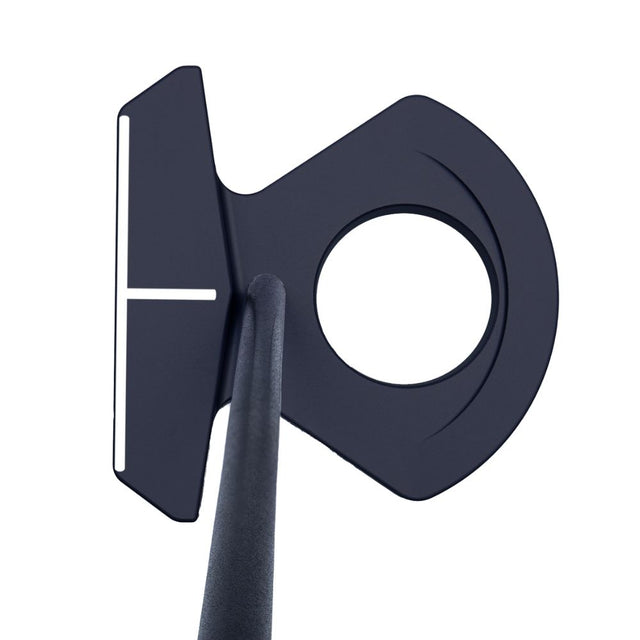
The marketing claim behind zero torque is that it's more stroke-agnostic than face balance — in theory it should stay square whether your stroke is straight or has some arc, because it isn't fighting a rotational bias from the grip. In practice, most reviewers still find it suits straighter strokes best, and some golfers with a pronounced natural arc report the putter feels like it's working against their motion.
Best Selling Zero Torque Putters:
- L.A.B. Golf DF3i Custom Putter — the insert version of L.A.B.'s original Directed Force design, adding a stainless steel face for a firmer, faster feel at impact.
- L.A.B. Golf VZN.1i Custom Putter — built around L.A.B.'s optically-optimized head shape to make aim easier to trust at address.
- Odyssey Tri-Hot Square 2 Square Jailbird SB Custom Putter — a single-bend hosel that shifts the shaft toward the heel for a more familiar look while keeping true zero-torque performance.
- TaylorMade 2026 Spider ZT-Max Custom Putter — pairing TaylorMade's Spider MOI frame with a low-torque hosel bored near the CG for a stable, toe-up setup.
Zero Torque vs. Face Balanced: Key Differences
| Face Balanced | Zero Torque | |
|---|---|---|
| Balance test | Face points up when balanced on a finger | Toe points up when balanced on a finger |
| What it resists | Face rotation along the stroke path | Rotational torque from the grip/hands, in addition to stroke path |
| Best stroke type | Straight-back-straight-through | Marketed as stroke-agnostic; most reliable for straight-to-slight-arc strokes |
| Typical construction | CG placed on/near the shaft axis; often double-bend or center-shafted | Shaft axis engineered to run directly into the head's CG, often with a bent shaft or forward-press grip |
| Common head shapes | Mallets and larger perimeter-weighted heads | Mallets, blades, and hybrid shapes with unconventional hosels |
| Example models | Scotty Cameron Phantom 9R, Phantom 12; TaylorMade Spider Tour X DB | L.A.B. DF3i, L.A.B. VZN.1i, Odyssey Tri-Hot S2S, TaylorMade Spider ZT-Max |
Low Torque vs Zero Torque
Low torque putters, like the Scotty Cameron 2026 Phantom 5 OC Custom Putter and the PING Scottsdale TEC Ally Blue Onset Custom Putter, sit in the middle of the spectrum — they reduce a very high amount of torque but do not eliminate torque. They reduce torque more than a face balanced design without going as far as a true zero-torque hosel and shaft bend. It's a good option if a full zero-torque setup feels like too big a jump from what you're used to at address.
Zero Torque vs Center Shafted
Are center shafted putters zero torque?
A center-shafted putter simply describes where the shaft enters the head — straight into the middle of the face rather than the heel. That construction is a common way to help a putter achieve face balance, but center-shafting on its own doesn't guarantee zero torque; it depends on exactly where the head's CG sits relative to that shaft.
In some cases, like the Bettinardi Antidote SB1, a center-shafted putter can be zero-torque. But that is due to the construction and placement of the CG relative to the shaft. Most center shafted putters are not zero torque.
Zero Torque vs. Lie Angle Balance
If you've seen the term lie angle balance, that's L.A.B. Golf's specific branded name for their zero-torque methodology — it's not a separate category. L.A.B. hand-balances each putter so the shaft axis runs into the head's CG, typically paired with a forward-press grip and shaft lean to keep the golfer's hands in a natural position at address. So "zero torque vs. lie angle balance" is really "the general design category" vs. "L.A.B.'s specific execution of it" — the DF3i and VZN.1i above are both Lie Angle Balance putters.
Spider Zero Torque vs. L.A.B.: How the Approaches Compare
TaylorMade's Spider ZT-Max and L.A.B.'s DF3i/VZN.1i are both marketed as zero torque, but they get there differently. The Spider ZT-Max builds on TaylorMade's high-MOI Spider frame — four corner weights plus a hosel bored near the CG with a slight shaft lean — layering low-torque hosel engineering onto a more traditional Spider silhouette. L.A.B.'s putters are designed from the ground up around their Lie Angle Balance calculation, which is why the head shape and shaft bend look more distinct at address. Neither is "more" zero torque in a strict sense — it comes down to whether you'd rather have a familiar Spider look with low-torque benefits, or L.A.B.'s purpose-built shape.
Zero Torque vs. Traditional (Toe-Hang) Putters
Classic blade putters — Ping Anser and Scotty Cameron Newport-style designs — are traditionally toe-hang: the toe drops when balanced, and the face is designed to open on the backstroke and close through impact to match an arcing motion. That works well if your stroke has a consistent arc, but it also means the putter is actively encouraging rotation, which can be unforgiving if your timing is inconsistent.
A zero torque putter removes that rotational tendency almost entirely, asking less of your hands and forearms to keep the face square regardless of path. Who tends to benefit most from making the switch?
- Golfers with a straight-back-straight-through stroke who've been fighting a toe-hang blade's natural urge to rotate
- Golfers who consistently miss in one direction (push or pull) tied to inconsistent face rotation timing
- Golfers curious whether a more "locked-in" feel at impact helps their start-line consistency
Golfers with a well-established, repeatable arc, on the other hand, often putt better with a toe-hang blade or a face balanced mallet that complements that motion rather than neutralizing it — a proper fitting is the most reliable way to know which camp you're in.
Our Top Zero Torque and Face Balanced Picks
| Putter | Type | Price |
|---|---|---|
| L.A.B. Golf DF3i | Zero Torque | $599 |
| L.A.B. Golf VZN.1i | Zero Torque | $599 |
| Odyssey Tri-Hot Square 2 Square Jailbird SB | Zero Torque | $599.99 |
| TaylorMade Spider ZT-Max | Zero Torque | $449.99 |
| Scotty Cameron Phantom 9R | Face Balance | $499 |
| Scotty Cameron Phantom 12 | Face Balance | $499 |
| TaylorMade Spider Tour X DB | Face Balance | $349.99 |
| Scotty Cameron Phantom 5 OC | Low Torque | $549 |
| PING Scottsdale TEC Ally Blue Onset | Low Torque | $399 |
Want to compare the full range in person (well, on-screen)? Browse our complete Zero Torque Putters collection to see every model, color, and configuration we carry.
Frequently Asked Questions
Is a zero torque putter better than a face balanced putter? Neither is universally "better" — it depends on your stroke and how much you want the putter to do the work of staying square. Zero torque takes stability a step further than face balance by also resisting torque from your grip, which particularly helps golfers who struggle with face control. Golfers with an established, repeatable arc often still prefer a face balanced or toe-hang design.
Do zero torque putters work with an arc stroke? Manufacturers market them as stroke-agnostic, and some golfers with an arc do fine with them. In practice, they're most reliably suited to straight-back-straight-through or slight-arc strokes — a strong, established arc can feel like it's fighting the putter's design.
What's the difference between zero torque and low torque? Zero torque designs engineer the shaft axis to run directly into the head's center of gravity, nearly eliminating rotational torque. Low torque designs reduce that torque without going as far, offering a middle ground for golfers who want more stability without a dramatic change in setup or feel.
Is L.A.B. Golf the same thing as zero torque? L.A.B. Golf's "Lie Angle Balance" is their specific branded method for achieving a zero torque result. Other brands, like Odyssey and TaylorMade, use different hosel and shaft-bend constructions to reach a similar outcome.
Should a beginner use a zero torque putter? Zero torque putters can help newer golfers who haven't developed a consistent stroke pattern yet, since the head resists twisting from the hands. That said, a proper fitting is still the best way to confirm what matches your stroke.


